
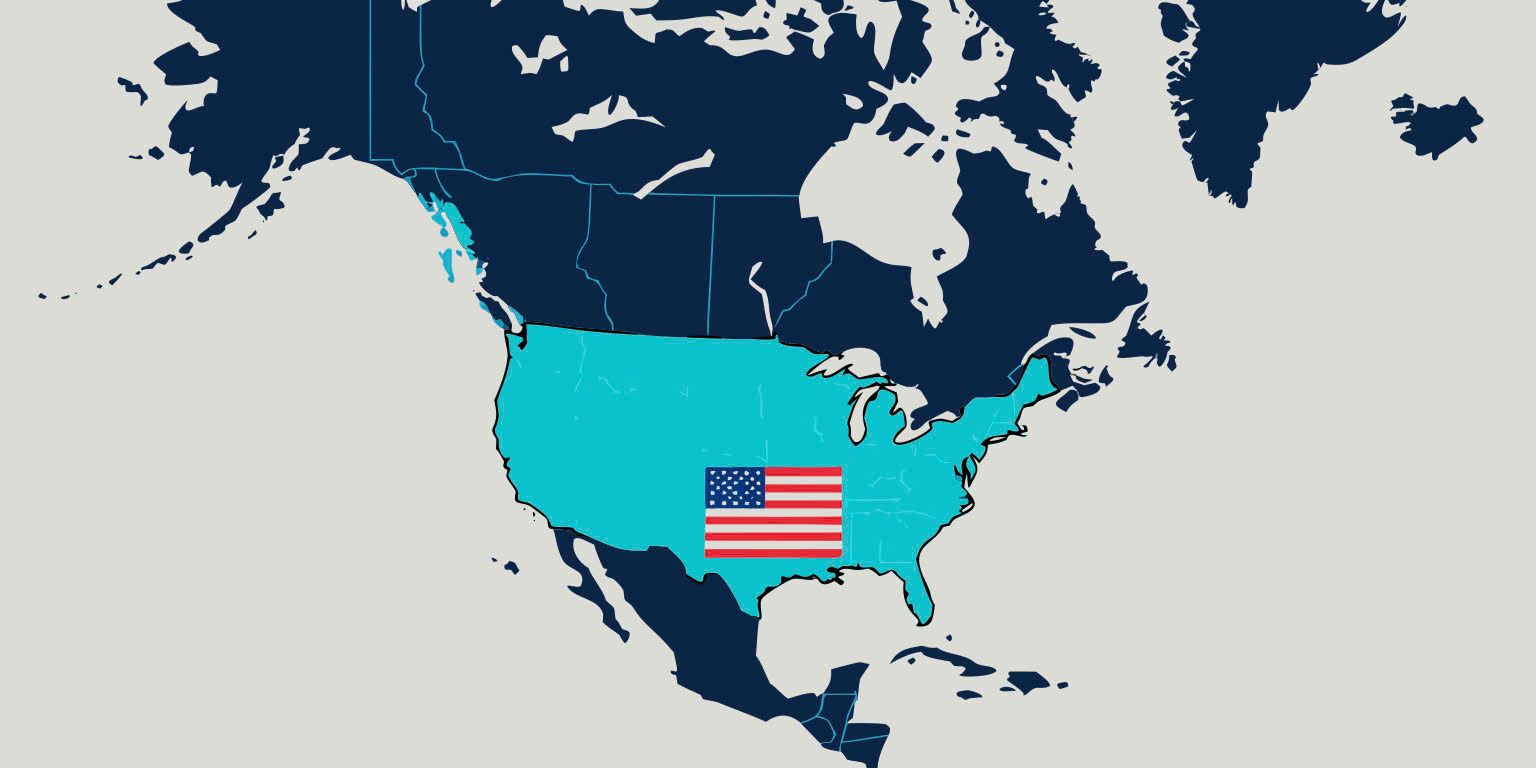
The United States accounts for over 40% of global remote job listings, but a 2024 analysis found that fewer than 18% of those listings explicitly welcome applications from outside North America.
In this article
- 1.Understanding the US Remote Job Landscape
- 2.W-2, 1099, and Corp-to-Corp: What They Mean for You
- 3.How to Detect Genuinely International-Open Roles
- 4.US Resume Format and ATS Optimization
- 5.Interview Culture: What US Hiring Managers Expect
- 6.Platforms and Networks That Yield Results
- 7.Common Mistakes International Candidates Make
No remote job market in the world matches the United States in scale, compensation, or the quality of companies actively seeking distributed talent. A senior engineer based in São Paulo targeting a Series B Austin startup, a product manager in Warsaw pursuing a fintech role in New York, a data scientist in Nairobi applying to a San Francisco AI company: these scenarios have become increasingly common, and increasingly viable, as US companies have formalized remote-first policies and developed the international payroll infrastructure to support them. The challenge is not finding US remote opportunities; it is identifying, with precision, which of those opportunities are genuinely open to you.
The gap between the promise and the reality of the US remote market is significant. Of the approximately 2.4 million remote jobs posted on major US platforms in 2024, an estimated 82% require US work authorization as either a legal requirement or an unstated assumption. The job postings themselves rarely make this explicit in the headline. Phrases like "remote friendly," "location flexible," and "work from anywhere" do not, by default, mean available to candidates outside the United States. Understanding how to read the fine print, and where to look for roles that have cleared that bar, is the foundational skill for a productive US job search from abroad.
This guide breaks down the US remote market systematically: the employment type frameworks that determine whether a company can hire you internationally, the specific language signals that reveal a role's true international openness, the ATS-driven resume conventions that determine whether your application reaches a human, and the interview culture norms that shape hiring decisions at American companies.
Understanding the US Remote Job Landscape
The US remote job market divides into two meaningfully distinct categories for international candidates: companies that have built international payroll infrastructure and explicitly welcome overseas applicants, and companies that use "remote" to mean "anywhere in the United States." These two categories are not distinguishable from job titles or seniority levels; they are distinguishable from specific language in job descriptions and from a company's known hiring history.
The companies most consistently open to international candidates tend to share a set of characteristics. They are either remote-first by design, having built their entire operating model around distributed teams, or they are companies that have completed international expansion and already operate with multi-country payroll. Companies like Automattic (WordPress), GitLab, Basecamp, Stripe, and Deel have published explicit worldwide remote hiring policies. YC-backed startups increasingly hire internationally from early stages, particularly for engineering roles where the talent pool is demonstrably global. Enterprise companies with strong international revenue streams, including Salesforce, HubSpot, and Atlassian, maintain employer-of-record arrangements in dozens of countries.
The companies least likely to hire internationally are mid-market US businesses that adopted remote work as a pandemic-era accommodation rather than a structural commitment. These companies often post roles as "remote" but mean remote within the United States, where payroll, benefits, and employment law are already familiar territory. The remote work policy exists; the international hiring infrastructure does not.
Key Takeaway
W-2, 1099, and Corp-to-Corp: What They Mean for You
Understanding US employment classifications is essential for international candidates, because the employment type directly determines whether a company can legally engage you, and under what terms. The three classifications that appear most frequently in US remote job postings each carry different implications.
W-2 employment
A W-2 position is full-time employment where the company withholds and remits payroll taxes on the employee's behalf. For international candidates, a US company can offer W-2 employment in two ways: by sponsoring a work visa (H-1B, O-1, or a TN visa for Canadians and Mexicans) or by engaging the candidate through an employer-of-record (EOR) service operating in the candidate's country of residence. The EOR path is the most common route for fully remote W-2 positions that welcome international applicants.
1099 contracting
A 1099 position treats the worker as an independent contractor. The company pays a gross rate and issues a 1099 tax form at year end; the contractor is responsible for their own taxes and benefits. For international candidates, 1099 arrangements are often the most accessible path to working with US companies, because they require no US payroll infrastructure. The company engages the international candidate as a foreign independent contractor, pays in US dollars via international wire or platforms like Deel, and has no employment law obligations in the candidate's country. The tradeoff is that 1099 rates must be self-calibrated to account for taxes, benefits, and the absence of employment protections.
Corp-to-Corp (C2C)
Corp-to-Corp arrangements involve the international candidate operating through their own registered company, which then invoices the US client. This structure provides additional legal clarity for both parties and is particularly common for senior engineering, consulting, and product roles where the engagement is project-based or long-term contract. A DevOps engineer based in Bucharest who has established a Romanian SRL (simplified limited liability company) can engage US clients on a C2C basis with clear invoicing, defined deliverables, and contractual protections on both sides.
Key Takeaway
How to Detect Genuinely International-Open Roles
Reading US job descriptions for genuine international openness is a skill that significantly improves the efficiency of a remote job search. Certain phrases and structural elements of a job posting are reliable indicators of a company's actual international hiring posture.
Green flag language
Postings that include phrases such as "worldwide remote," "global remote," "work from anywhere in the world," "we hire internationally," or explicit mention of EOR providers (Deel, Remote.com, Rippling) are the clearest indicators that international candidates are genuinely welcome. References to specific countries or regions where the company has hired previously are also strong signals. Some postings list the countries in which the company can currently employ, which eliminates ambiguity entirely.
Red flag language
Phrases that effectively exclude international candidates include "must be authorized to work in the United States," "US persons only," "eligible to work in the US without sponsorship," and any reference to specific US state locations. The phrase "remote (US)" in the location field of a job posting is a near-universal indicator that the role is domestic only, regardless of how the body of the posting describes flexibility.
Gray zone postings
Many postings fall into an ambiguous middle ground, where work authorization requirements are not stated explicitly but also not confirmed as absent. For these postings, the most efficient approach is a brief, direct email to the recruiter or hiring manager before submitting a full application. A single-sentence inquiry, "Before applying, I wanted to confirm whether you consider candidates based outside the United States," takes thirty seconds and saves potentially hours of wasted application effort. US recruiters are accustomed to this question and will answer it promptly.
Key Takeaway
US Resume Format and ATS Optimization
The US resume is a single-page document for most candidates with fewer than ten years of experience, and a maximum two-page document for senior candidates. This is non-negotiable in the American market. The dense, comprehensive two-page CVs that are standard in Germany, appropriate in the UK, and common in France immediately signal to a US recruiter that the candidate has not adapted their materials for the American context.
ATS optimization is not optional in the US market. Most companies above thirty employees use Applicant Tracking Systems, including Greenhouse, Lever, Workday, and iCIMS, to screen resumes before a human recruiter reviews them. These systems match the text of your resume against the job description, flagging candidates whose documents include the specific keywords and phrases the hiring manager identified as essential. A resume that describes "extensive experience in machine learning" will score below a resume that uses the exact phrase "five years of experience developing and deploying production machine learning models" when the job description uses that language.
No personal information belongs on a US resume. No photos, no dates of birth, no nationality, no marital status. US Equal Employment Opportunity (EEO) regulations mean that US recruiters are specifically trained to flag and discard information that could create a discrimination liability. Including it does not demonstrate thoroughness; it signals unfamiliarity with US employment law norms.
Key Takeaway
Interview Culture: What US Hiring Managers Expect
US hiring processes move quickly. The typical sequence at a US tech company runs from application to offer in two to four weeks: an initial recruiter screen, one or two technical or skills assessments, a panel interview, and an offer. This is significantly faster than German or French processes, and the pace is intentional. US hiring managers operate on the assumption that strong candidates are evaluating multiple opportunities simultaneously, and that a slow process loses good people.
Self-advocacy is expected in US interviews in a way that can feel unfamiliar to candidates from more modest professional cultures. Being direct about achievements, comfortable stating salary expectations, and clear about what you are looking for are not considered aggressive; they are considered professional. The framing "I built", "I led", "I delivered" is standard and expected. The British preference for collaborative framing can feel evasive to a US hiring manager who is trying to assess individual capability.
Timezone communication is a practical interview topic that international candidates should address proactively. US hiring managers will ask about it. The most effective approach is to be specific about your available overlap hours and confident that the structure works. A backend engineer based in Warsaw who has successfully operated on a schedule with five hours of daily overlap with a US team for two years has a more persuasive answer than one who says they are "flexible" without specifics.
Key Takeaway
Platforms and Networks That Yield Results
- JobConnect AI: Applies a Remote-Friendly Detector to US job postings, identifying roles that explicitly welcome international applicants, flagging work authorization language, and distinguishing genuine worldwide remote positions from domestic US remote roles.
- We Work Remotely: One of the largest remote-specific job boards, with strong US representation and a meaningful proportion of listings that explicitly welcome international applicants.
- Remote.co: Curates remote positions from companies with established remote-first cultures, many of which hire internationally.
- LinkedIn Jobs: With location set to "Remote" and a Boolean search that includes terms like "worldwide remote" or "international candidates welcome," LinkedIn surfaces a significant volume of genuinely accessible US opportunities.
Consider this a separate search worth running: Y Combinator's Work at a Startup platform connects candidates directly with YC-funded companies, a disproportionate share of which hire internationally for engineering roles. It surfaces opportunities that rarely appear on standard job boards and reaches companies that are often in their first international hire.
Common Mistakes International Candidates Make
The mistakes that most consistently undermine international candidates in the US market fall into three categories: misreading job posting signals, misformatting application materials, and mishandling the work authorization conversation.
- Assuming 'remote' means globally accessible: The large majority of US remote job postings use 'remote' to mean remote within the United States. Applying without confirming international eligibility wastes application effort and can create a negative recruiter impression if the mismatch is obvious from the candidate's location.
- Submitting a multi-page CV in the European format: A two or three-page German-style Lebenslauf or British-style comprehensive CV submitted to a US company will typically be shortened or deprioritized by ATS systems calibrated for one-page documents and may not be read in full by human reviewers.
- Avoiding the work authorization conversation: Waiting until an offer stage to raise the question of international employment structure is the most common reason US remote offers fall apart for international candidates. Raising it early, matter-of-factly, identifies whether the opportunity is viable and signals professional transparency.
- Underpricing on salary expectations: International candidates frequently quote salary expectations calibrated to their local market rather than US market rates. US companies hiring internationally typically pay at or near US market rates, particularly for technical roles. Underquoting signals either a misunderstanding of the market or underconfidence in one's own profile.
What this means for timezone communication is worth stating directly: "I can be flexible" is not reassuring. Specific, confident statements about your working schedule and daily overlap hours are more persuasive and remove a key point of uncertainty before the offer stage arrives.
Key Takeaway
Frequently Asked Questions
What is the most common way US companies pay international remote contractors?
Most US companies pay international contractors through platforms like Deel, Remote.com, Payoneer, or international wire transfer. Deel and Remote.com have become dominant in this space because they handle compliance, currency conversion, and local tax documentation. Confirming the payment platform at the offer stage is standard practice.
Can I negotiate a US-market salary as an international remote candidate?
Yes, and you should. US companies hiring internationally for technical and product roles typically benchmark compensation against US market rates, particularly for senior positions. Negotiating based on the role, the market, and your credentials, rather than your local cost of living, is not only acceptable but expected.
What is the H-1B visa and should international candidates expect sponsorship?
The H-1B is a US work visa for specialty occupations. It is subject to an annual lottery with highly competitive odds and is not a reliable path for most international remote candidates. EOR arrangements and 1099 contracting are far more viable and faster for most remote roles. Do not plan a US job search around H-1B sponsorship unless a specific company has indicated it as a concrete option.
How important is timezone overlap for US remote roles?
It varies significantly by company and role. Engineer roles at product companies often require three to four hours of daily overlap with core team hours, typically 10am to 2pm US Eastern or Pacific time. Strategy, management, and customer-facing roles typically require more. Being transparent and specific about your overlap capacity during the hiring process eliminates the most common source of post-hire friction for international remote employees.
Do I need a US LLC or corporation to work with US companies?
Not necessarily. Many US companies engage international contractors directly through their local legal entity or personal invoice, without requiring the contractor to establish a US business entity. A Corp-to-Corp structure using a local entity in your country of residence is often cleaner and sufficient. Consult a local accountant familiar with international contractor arrangements before establishing a US entity purely for this purpose.
The US remote job market is the largest and highest-compensating in the world for international candidates, and it is more accessible than its work authorization reputation suggests, provided candidates approach it with accurate information rather than assumptions. The key skills are reading job postings precisely for international eligibility signals, raising work authorization questions early and professionally, formatting materials for the US market specifically, and calibrating compensation expectations to US benchmarks. None of these are complex; they are simply not the default approach most international candidates bring.
JobConnect AI's Remote-Friendly Detector removes the most time-consuming part of the US remote job search: manually filtering thousands of listings to find the minority that are genuinely open to international candidates. Every listing in the platform has been evaluated for work authorization language, employment type, and international hiring history before it reaches you.