
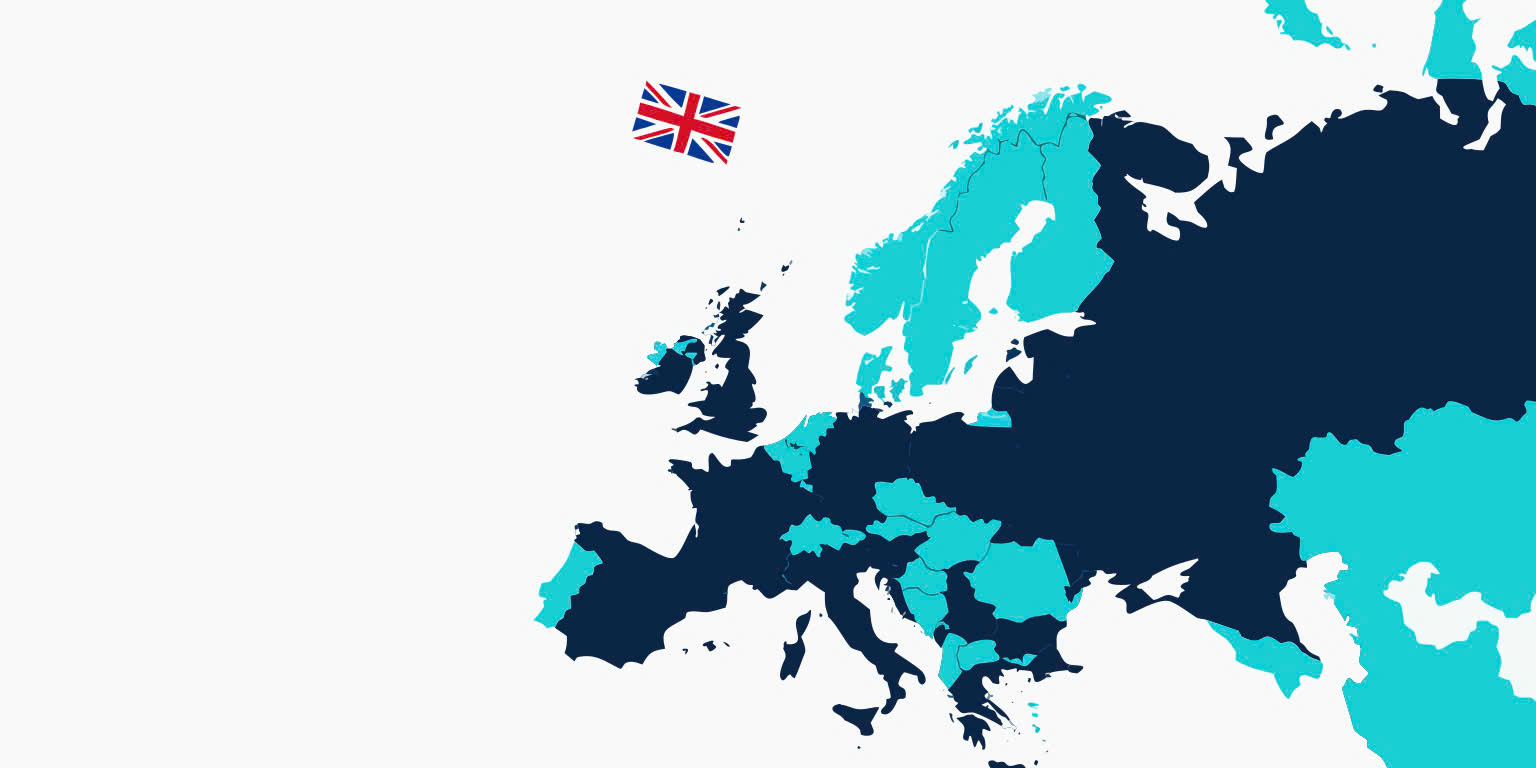
The United Kingdom produces more tech unicorns than any other European country. Yet fewer than 30% of international candidates submit a CV that meets British professional standards.
In this article
- 1.Why the UK Remains a Premier Remote Job Market
- 2.CV vs Resume: What Changes for the UK
- 3.Right-to-Work and Post-Brexit Reality
- 4.British Professional Culture
- 5.Sectors With the Strongest International Hiring
- 6.Platforms That Hire Internationally for UK Roles
- 7.Common Mistakes International Candidates Make
London's financial district, the fintech corridor stretching from Shoreditch to Canary Wharf, and the quietly world-class tech clusters in Manchester, Edinburgh, and Bristol make the United Kingdom one of the most compelling remote job markets available to international candidates. Post-Brexit, the landscape has shifted in ways that are not always intuitive: some doors have closed, others have opened unexpectedly, and international candidates who understand the current reality rather than the pre-2021 assumptions are consistently better positioned to succeed.
What makes the UK market distinctive, beyond its concentration of exceptional companies, is how clearly defined its professional standards are. A data scientist based in Lagos who submitted a polished, achievement-focused US-format resume to a London fintech discovered firsthand what UK recruiters mean when they say a CV feels "thin": two pages of metric-driven bullet points, no personal statement, no structured career narrative. Technically impressive. Professionally unconvincing in the British context. The same candidate resubmitted with a UK-format CV two weeks later and was invited to interview.
This guide addresses every aspect of breaking into the UK remote job market from abroad: the CV conventions that differ meaningfully from US norms, the right-to-work framework post-Brexit, the British professional culture that influences hiring decisions at every stage, and the specific sectors and platforms where international openness is highest.
Why the UK Remains a Premier Remote Job Market
Despite the economic and regulatory disruption of Brexit, the United Kingdom remains Europe's leading tech talent destination by most measures. London alone hosts more than 40,000 technology companies and attracts over £10 billion in venture capital investment annually. Revolut, Monzo, Wise, Starling Bank, Deliveroo, and Babylon Health are among the dozens of UK-headquartered companies that have built explicitly global, remote-first teams.
Salaries are compelling: senior software engineers earn £70,000 to £130,000 in London, with remote roles at UK companies often maintaining competitive packages even for candidates based outside the UK. The English language is the default working language, eliminating the barrier that makes Germany or France more challenging for many international candidates. And the UK's mature startup ecosystem means that the quality of companies available, particularly in fintech, healthtech, and B2B SaaS, is consistently high.
The remote work culture at UK tech companies has solidified since 2020. Companies like Monzo, Multiverse, and GoCardless have established distributed-team policies that explicitly accommodate international team members. The challenge for international candidates is less about finding willing employers and more about presenting themselves in the format those employers expect.
Key Takeaway
CV vs Resume: What Changes for the UK
The first thing international candidates must understand about the UK job market is the terminology itself. In the United Kingdom, the document is called a CV, not a resume. This distinction is not merely semantic; it carries specific expectations about length, content, and structure that differ meaningfully from the one-page resume standard dominant in the United States.
Length: Two pages is standard
UK CVs for experienced candidates are expected to run two pages. A single-page resume, standard practice in the US for candidates with under ten years of experience, is typically perceived by UK recruiters as underdeveloped. It suggests either a lack of experience or, worse, a candidate who applied without adapting their materials to the British context. The appropriate length is two pages for most mid-career and senior candidates, with a first page that draws the reader in quickly and a second page that provides the depth to support the narrative.
No personal information
Unlike Germany's Lebenslauf, which requires date of birth, nationality, and marital status, UK CVs must contain none of this information. The Equality Act 2010 means that UK recruiters are trained to screen out personal details that could inadvertently influence hiring decisions based on protected characteristics. Including a photo, age, or nationality on a UK CV does not merely fail to help; it actively signals that the candidate is unfamiliar with British professional norms, which is a meaningful negative signal at the initial screening stage.
Achievement-driven, not duty-driven
UK CVs should quantify achievements rather than list responsibilities. The bullet point "Responsible for backend API development" conveys little to a British recruiter trained to look for impact. The alternative, "Reduced API latency by 40% across a system serving 2 million daily active users, enabling the team to meet a critical SLA contractually required by three enterprise clients," conveys competence, context, and consequence. Every bullet point in a UK CV should answer the implicit question: so what?
British English throughout
Use British spelling consistently: optimise rather than optimize, colour rather than color, centre rather than center. This is a small detail that has a disproportionate signaling effect. A CV written in American English submitted to a London company tells a recruiter that the candidate applied without reviewing the document for the British context, which suggests a similar degree of care in their work.
Key Takeaway
Right-to-Work and Post-Brexit Reality
Brexit fundamentally changed the right-to-work framework for international candidates targeting UK companies. Before 2021, EU nationals had automatic rights to work in the United Kingdom; that framework no longer applies. Understanding the current landscape is essential before investing significant effort in a UK job search.
For non-UK residents applying to UK companies for remote roles, the picture is more nuanced than it first appears. Many UK companies that recruit internationally for remote positions hire contractors or engage candidates through employer-of-record arrangements, which sidestep UK work permit requirements entirely. The candidate is legally employed in their country of residence, not the UK, and the UK company engages them as an overseas service provider. This arrangement has become standard at UK tech companies with global remote policies.
For candidates seeking UK-based employment with a UK work visa, the Skilled Worker visa (formerly Tier 2) is the primary pathway. The sponsoring company must hold a sponsor licence, and the role must meet salary thresholds that vary by occupation. Many UK tech companies do hold sponsor licences, particularly those that recruited internationally before Brexit and maintained the infrastructure to do so. Job postings that mention "visa sponsorship available" are worth prioritising; those that state "right to work in the UK required" indicate that sponsorship is not available for that role.
Key Takeaway
British Professional Culture
British professional culture has characteristics that international candidates sometimes misread, particularly those coming from direct communication cultures like Germany or the high-energy assertiveness culture common at US startups. Understanding these characteristics is useful not only for interviews but for day-to-day collaboration on a distributed team.
British professional communication tends toward understatement. A British manager who says "that's an interesting approach" in response to a proposal may be expressing genuine approval or polite scepticism; the context usually clarifies which, but candidates used to more explicit feedback often find the ambiguity disorienting at first. Direct criticism, when delivered, is typically framed constructively rather than bluntly, a contrast to the directness common in German professional culture.
Humility in self-presentation is valued. The aggressive first-person achievement framing common in US professional culture, "I built", "I drove", "I led", can read as self-aggrandizing in a British context. British CVs and interviews tend to use collaborative language: "as part of a team of four engineers, we delivered", "working closely with the product team". This does not mean downplaying achievements; it means framing them in a collaborative context, which aligns with how UK companies typically describe their own work.
Key Takeaway
Sectors With the Strongest International Hiring
Not all UK sectors hire internationally with equal openness. Certain industries have built explicitly global teams as a core structural choice, and targeting these industries significantly improves the odds for international candidates.
Fintech is the standout sector. Companies like Revolut, Wise, Monzo, and Starling Bank have built distributed engineering and product teams across dozens of countries, with robust remote-work infrastructure and EOR arrangements in place. Their job postings routinely specify worldwide remote eligibility. Healthtech is similarly open, with companies like Babylon Health, Lantum, and Accurx having normalised remote-first hiring partly in response to the pandemic-driven acceleration of digital health adoption. B2B SaaS companies, particularly those targeting the US market from a UK base, frequently hire internationally for roles where timezone overlap with the Americas is an advantage rather than a barrier.
Key Takeaway
Platforms That Hire Internationally for UK Roles
- JobConnect AI: Scans UK job postings and identifies genuine remote-first roles that accept international candidates, filtering out "UK-only" listings and flagging right-to-work requirements before you apply.
- LinkedIn Jobs: The dominant platform for UK professional hiring. Filtering for "Remote" combined with location set to "United Kingdom" and company size filters for startups and scale-ups surfaces the most internationally accessible opportunities.
- Otta: A UK-focused job platform that specialises in startup and scale-up roles, with strong representation from London fintech and tech companies that hire internationally.
- Relocate.me: Surfaces European remote roles with explicit international eligibility, including strong UK representation.
For creative, product design, and brand roles, Working Not Working deserves a separate search. It specialises in design-forward UK companies and surfaces remote representation in the creative industry that standard tech-focused job boards consistently underrepresent. Is your role at the intersection of design and tech? This platform will surface opportunities that LinkedIn rarely shows.
Common Mistakes International Candidates Make
The majority of international applications to UK companies fail not at the skills assessment stage but at the initial screening stage, where CV format and professional convention signal whether the candidate has done their homework on the British market.
- Submitting a one-page US resume: UK recruiters consistently describe one-page CVs from experienced candidates as feeling thin and underdeveloped. A two-page UK-format CV demonstrates that the candidate understands British professional standards.
- Including personal details: Listing age, nationality, or a photo on a UK CV immediately signals unfamiliarity with British equality law and professional norms, both negative signals at the screening stage.
- Using American English: Submitting a document with American spelling to a British company is one of the clearest indicators that the application has not been adapted for the UK market.
- Ignoring right-to-work requirements: Applying for roles that explicitly require UK work authorisation without either holding that authorisation or inquiring about sponsorship wastes time for both candidate and recruiter.
The key insight here is that UK hiring managers assess impact, not scope. A CV that describes what you were responsible for, rather than what you actually delivered, consistently fails the benchmark British recruiters apply. Quantified achievements are the standard unit of professional evidence in this market. Without them, even a genuinely strong candidacy reads as underprepared.
Key Takeaway
Frequently Asked Questions
Can I apply for UK remote jobs without the right to work in the UK?
Yes, if the company hires internationally through contractor or employer-of-record arrangements. Many UK tech companies, particularly in fintech and SaaS, engage overseas talent this way. Look for postings that explicitly mention "worldwide remote" or "global remote" to identify these opportunities.
Should I include a personal statement on my UK CV?
A two to three sentence professional summary at the top of your CV is standard and recommended in the UK. It should describe your professional identity, key areas of expertise, and what you are looking for. Keep it factual and achievement-oriented rather than generic.
How long does a UK hiring process typically take?
UK hiring processes are generally more structured and slower than US processes. Expect two to four weeks from application to first response at well-resourced companies, with a total process running four to eight weeks from application to offer. Following up after two weeks if you have received no response is entirely appropriate.
Do UK companies use ATS systems the same way as US companies?
Yes. Most UK companies above a certain size use Applicant Tracking Systems such as Greenhouse, Lever, or Workday. Keyword matching applies. Review each job description carefully and ensure that your CV uses the specific terminology and skill names mentioned in the posting.
Is a cover letter expected for UK job applications?
Cover letters are less culturally entrenched in the UK than in Germany, but they remain a valuable differentiating tool when the candidate has something specific and relevant to say. A generic cover letter is worse than no cover letter. A tailored, specific cover letter is better than both.
The UK remote job market rewards candidates who combine strong technical credentials with a precise understanding of British professional conventions. The CV format, the language register, the right-to-work framework, and the cultural norms around self-presentation are all learnable systems, and mastering them is what separates international candidates who consistently advance in UK hiring processes from those who plateau at initial screening.
JobConnect AI's Remote-Friendly Detector identifies which UK job postings explicitly welcome international applicants, flags right-to-work requirements upfront, and surfaces the fintech, healthtech, and SaaS companies most likely to have international hiring infrastructure in place. The British CV builder generates a two-page, achievement-focused, UK-standard document ready for submission.