
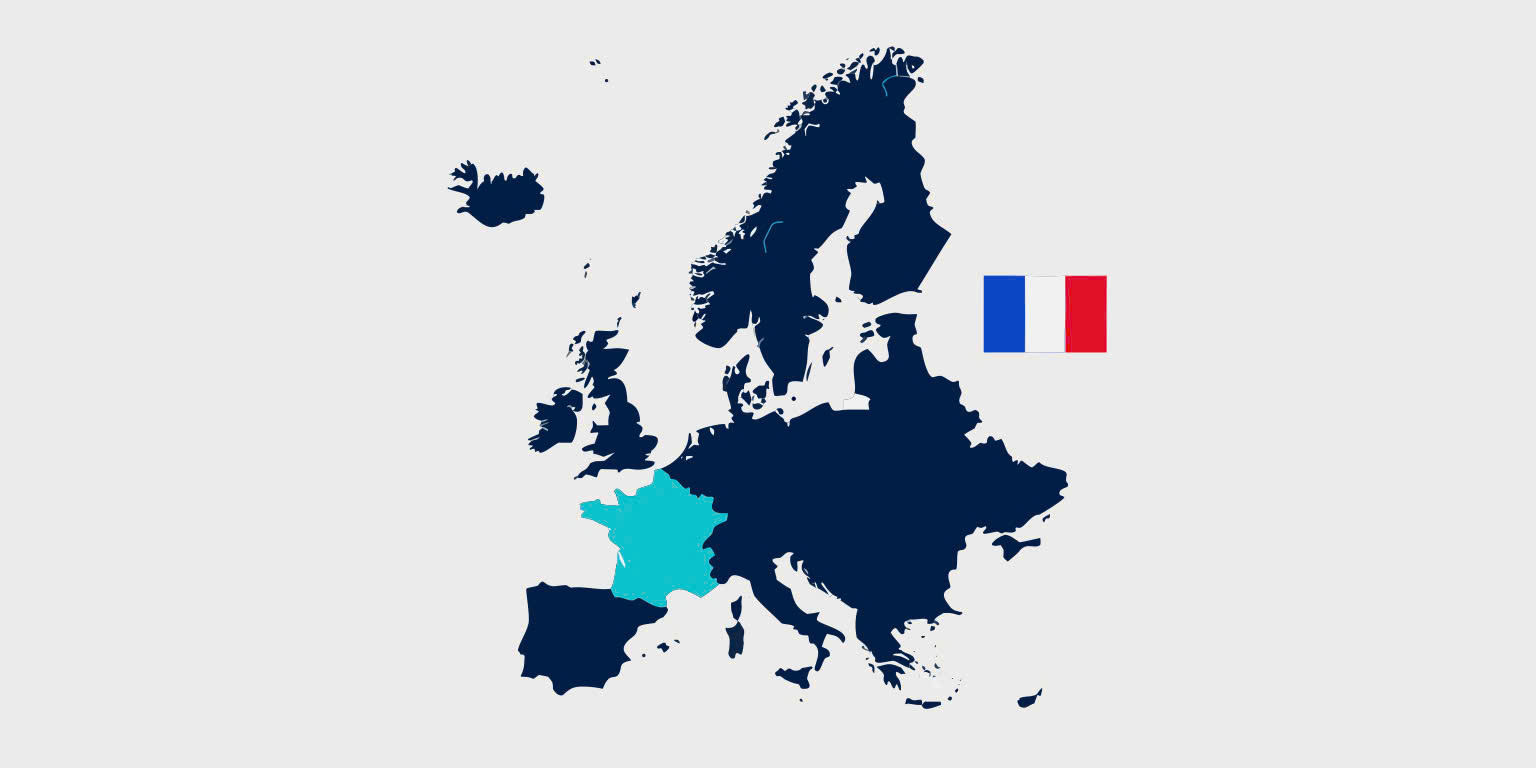
France passed groundbreaking remote work legislation in 2021, opening the door for international talent to work for French companies without relocating. Yet most candidates still apply using formats that immediately disqualify them.
In this article
France has undergone a quiet but consequential transformation as a remote work destination. The post-pandemic télétravail legislation of 2021, which formally established remote work as a negotiable right for employees, coincided with a sustained investment boom that pushed the French Tech ecosystem to unprecedented scale. For international professionals targeting French employers from abroad, the market opportunity is genuine and growing. The challenge is that most candidates enter the application process without understanding how distinctly French the professional conventions are, and they are screened out for reasons that have nothing to do with their technical qualifications.
The norms governing French CVs, cover letters, and day-to-day workplace communication differ enough from Anglo-American standards that an unprepared candidate can make multiple disqualifying errors before a single hiring manager has reviewed their credentials. A UX designer based in Buenos Aires who applied to a Lyon-based healthtech startup in 2024 described sending fifteen applications before discovering that her CV included a professional photograph, a format that is not merely unusual in France but actively flagged as a compliance risk by French HR professionals. Removing the photograph and restructuring her lettre de motivation to follow the standard French three-part format resulted in three interview invitations within four weeks.
This guide addresses the specific cultural and professional norms that international candidates must understand to work effectively for French employers, whether they are currently navigating a remote role with a French company or actively pursuing one.
The French Tech Landscape
France has established itself as the leading startup ecosystem in continental Europe, driven by a combination of government policy, institutional investment, and talent density concentrated in Paris and several regional cities including Lyon, Bordeaux, and Toulouse. Station F, the world's largest startup campus located in Paris's 13th arrondissement, hosts companies from more than fifty countries and serves as a visible marker of France's deliberate strategy, formalized through the La French Tech program since 2013, to become a global technology hub.
The companies most accessible to international remote candidates are concentrated in a specific tier: venture-backed scale-ups that operate internationally and have adopted English as their internal working language. Companies such as Contentsquare, Mirakl, Qonto, Alan, Pennylane, and Doctolib employ distributed teams across Europe and beyond, where engineering, data science, and product functions operate in English. These organizations represent the realistic target set for international remote candidates who lack French fluency.
Traditional sectors, including finance, law, insurance, retail outside of digital commerce, and most government-adjacent industries, remain largely inaccessible to international candidates without strong French and, typically, in-country presence. The remote opportunity is real but sectorally concentrated. Candidates who research their target companies carefully before applying will invest their effort far more efficiently than those who apply broadly across the French job market.
Key Takeaway
CV Format and Legal Context
The French CV follows specific conventions that diverge from both US and German standards, and several of these conventions carry legal grounding that most international candidates are entirely unaware of. Understanding them is not merely a matter of cultural adaptation; it is a prerequisite for passing initial screening at most French companies.
No Photo: The Legal and Professional Standard
Unlike Germany, where a professional headshot on the CV is a standard expectation, France has clear official guidance from the Défenseur des droits, the national equality authority, that photographs on CVs create discrimination risk based on appearance, age, and ethnicity. French HR professionals are trained to treat CV photos as a compliance concern. Including a photograph does not merely signal unfamiliarity with local norms; it can raise questions about the candidate's understanding of French employment law. The rule is simple: omit the photograph in all circumstances, regardless of conventions from the candidate's home country or other European markets.
Education Before Experience for Junior Candidates
French professional culture places exceptional weight on educational credentials, particularly for candidates with fewer than five years of experience. The Formation (education) section should precede Expériences Professionnelles (work experience) for these candidates. French recruiters at larger organizations use academic institution as a first-pass filter, applying a prestige hierarchy that favors Grandes Écoles graduates and internationally ranked universities over less-recognized institutions.
International candidates whose universities are highly regarded in their region but not widely recognized in France should add explicit ranking context. A candidate from Bangalore might write: "Indian Institute of Technology Bombay, ranked top 5 engineering institution in Asia (QS 2026)." This provides French recruiters with the reference point they need to evaluate a credential they cannot independently assess.
Section Structure and Labels
For French-language applications, using standard French section labels signals professional awareness of local conventions. The core sections and their expected French labels are as follows:
- Expériences Professionnelles: Work experience in reverse chronological order, with role descriptions written in complete sentences rather than American-style bullet fragments.
- Formation: Education and academic qualifications, with added ranking context for institutions that are not internationally recognized in France.
- Compétences: Technical and professional skills, organized clearly by category and avoiding generic filler terms.
- Langues: Languages with CEFR proficiency levels listed explicitly, such as B2, C1, or C2.
For English-language applications at international French companies, standard English section labels are appropriate, but the structural priority placing education before experience for junior candidates still applies. The CV should be one page for candidates with fewer than eight years of experience, and the design should reflect clear visual hierarchy with generous whitespace rather than the dense text-block format common in US applications.
Key Takeaway
The Lettre de Motivation
The lettre de motivation is not optional for most French applications, including remote positions at companies that operate in English. It follows a specific three-part structure that French recruiters are trained to evaluate, and deviation from this structure, or the use of the single most common opening error in French applications, signals immediately that the candidate has not adequately researched French professional norms.
L'Accroche: Specific, Not Generic
The most consistent error international candidates make in French cover letters is opening with a direct statement of application: "Je me permets de vous contacter pour postuler au poste de..." This formula is recognizable to every French recruiter as the sign of an unpersonalized letter and is frequently sufficient cause for immediate screening rejection, regardless of the qualifications that follow in the rest of the document.
The correct approach is an opening that demonstrates specific knowledge of the company: a recent milestone, a direct connection between the candidate's experience and a publicly discussed company challenge, or a precise observation about the company's strategic direction. Generic enthusiasm about working in France or in the tech industry is not a substitute for company-specific research, and French recruiters are experienced at identifying the difference.
Le Développement: Evidence and Company Fit
The body of the lettre de motivation consists of exactly two paragraphs. The first presents the candidate's relevant qualifications with two or three specific evidence points, expressed ideally in terms of outcomes rather than activities. The second paragraph addresses why this specific company, not why France, not why remote work in general, but why this employer, based on their product direction, market position, or publicly stated values. French recruiters can immediately distinguish between letters that reflect genuine company research and those that recycle generic language to fill the page.
La Conclusion: Professional Restraint
The closing should be brief and professionally restrained. French professional culture does not reward the effusive enthusiasm common in American cover letters. The standard professional closing, "Dans l'attente d'un éventuel entretien, je vous adresse mes cordiales salutations," communicates exactly the right register: professional engagement without over-eagerness, and an implicit confidence in the strength of the preceding letter.
Key Takeaway
Professional culture in France values restraint and precision over demonstrative enthusiasm. The candidate who demonstrates specific knowledge of the company's challenges will consistently outperform the candidate who expresses excitement about the opportunity in general terms.
Professional Culture and Communication
International professionals working for French companies, particularly in remote environments, consistently identify professional culture as the least intuitive element of the experience. The norms are real and consistent across French organizations, and misreading them has measurable consequences for professional relationships and career development within French companies over time.
The Vous/Tu Distinction
French maintains a formal second person singular, vous, and an informal second person singular, tu. In professional contexts, vous is mandatory until the other person explicitly extends the invitation to tu. Using tu before this invitation signals a presumption of familiarity that has not been established, which reads as disrespectful in French professional culture regardless of intent. In all written professional communication, including emails and Slack messages to new colleagues, default to vous unconditionally. At French companies that operate in English, this grammatical distinction does not apply directly, but the underlying formality preference persists: initial communications with recruiters and senior stakeholders should be more formally toned than equivalent messages to US or UK counterparts.
Hierarchy and Remote Decision-Making
French organizational culture is more hierarchical than most Anglo-American equivalents, and this hierarchy operates differently in remote environments than international candidates often expect. Decisions concentrate upward in the organization; junior employees do not typically challenge senior ones in group settings, and the protocol for escalating questions or disagreements follows established channels rather than the direct, flat-hierarchy communication style common in US startups. For international remote workers, the practical implications are to address senior stakeholders formally, prepare structured arguments before presenting disagreement, and route communications through appropriate channels rather than directly to leadership.
From Présentéisme to Télétravail
France had a historically strong attachment to présentéisme, the cultural expectation of physical office presence regardless of actual productivity, that persisted even where remote work was technically feasible. The post-pandemic period has substantially changed this dynamic, particularly at French startups and scale-ups. The 2021 télétravail legislation reinforced the shift by establishing remote work as a formally negotiable right. However, candidates should research each target company's actual current culture before assuming that all French tech organizations are genuinely remote-first in practice.
Key Takeaway
Language: When Is French Required?
Language requirements at French companies stratify predictably by role type, and understanding this stratification before applying prevents wasted effort and mismatched expectations on both sides. Research across French tech employers consistently reveals the following patterns:
- Engineering, data science, and DevOps: English is sufficient at most French tech companies above fifty employees, where codebases, technical documentation, and engineering discussions default to English as the working language.
- Product management: English works for technical PM functions; French is frequently required for stakeholder management and user research at companies primarily serving French-speaking markets.
- Design and UX: English is appropriate for international product roles; French is expected for local market and brand-facing design work.
- Marketing, content, and community management: French is required in nearly all cases for roles serving French-speaking markets, with limited exceptions in international growth or performance marketing functions at globally oriented companies.
For candidates with French at an intermediate level, stating this explicitly on the CV as "French, B1 (in progress)" signals good faith and cultural awareness, even where it does not qualify the candidate for French-language work. Hiring managers at internationally oriented French companies consistently report that this signal of engagement with the local market differentiates the candidate when other qualifications are otherwise equivalent.
Key Takeaway
Where to Find Remote Roles
Not all job boards surface French companies that genuinely accept international remote candidates. Several platforms are consistently more effective for this specific search than others:
- Welcome to the Jungle: The dominant platform for French startups and scale-ups, with detailed company profiles that reveal the working language and remote work policy before the application is submitted. Filter by télétravail to surface remote roles.
- LinkedIn Jobs (France): Essential for senior roles and for French subsidiaries of international companies. Filter by France and Remote, and assess whether the job description language indicates English or French operation at the company level.
- JobConnect AI: The Remote-Friendly Detector identifies French listings that genuinely accept international remote candidates and flags roles requiring EU presence or French language proficiency, eliminating the most common source of wasted applications.
- APEC (apec.fr): The leading French platform for experienced professionals with three or more years of experience and for executive-level roles. A French-language platform, but many international tech companies post senior engineering and management positions here.
Common Mistakes International Candidates Make
The errors that most consistently prevent qualified international candidates from advancing in French application processes are not technical. They are cultural and procedural, and they occur before any skills assessment takes place. Awareness of these patterns is the most immediate lever available to international candidates for improving application outcomes.
- Including a photograph on the CV: This signals unfamiliarity with French employment norms and creates compliance concerns for the HR team reviewing the application, regardless of the quality or professionalism of the photograph itself.
- Opening the lettre de motivation with a generic application statement: The formulaic first-line approach is the single most consistent reason French recruiters dismiss an otherwise strong application at the first review, and it is entirely avoidable.
- Applying for French-language roles without the required proficiency: Marketing, content, and community roles in French are not accessible to candidates below C1 level, regardless of how strong the creative or technical qualifications are on the rest of the CV.
- Using informal register in initial professional communications: First contact with French recruiters should match the formal tone of the lettre de motivation; casual or overly direct communication signals a misunderstanding of professional norms from the very first impression.
One assumption underlies several of these errors and deserves to be named directly: that an English-operating French company shares professional norms with a UK or US employer. It does not. The hierarchy is real, the formality preferences are persistent, and the three-part lettre de motivation structure is expected even at companies that conduct all internal work entirely in English. The working language is not the same as the professional culture.
Frequently Asked Questions
Do I need a French work permit to work remotely for a French company from abroad?
No. If you remain in your home country and invoice the French company as an independent contractor, no French work authorization is required. You pay taxes entirely in your home country, and the French company treats the payment as a professional services fee. Employer of Record services such as Deel and Remote.com can also formally employ you in your home country on behalf of the French company, with full local employment benefits.
Is the lettre de motivation always required for French remote applications?
For most French companies, including those offering remote positions, the lettre de motivation is expected. Even when listed as optional, a well-crafted letter in the correct three-part structure substantially differentiates the application. French recruiters note its absence, particularly from senior candidates, and often interpret the omission as a lack of genuine engagement with the company.
Should I submit my CV in French or English for remote roles at French companies?
For roles at companies that operate primarily in English, an English CV is appropriate. For French-language companies or for positions where French is a stated requirement, a French-language CV is expected. The language of the job description itself reliably indicates the expected application language in the vast majority of cases.
How much does educational prestige matter to French employers?
More than most international candidates expect, particularly for those with fewer than five years of experience. French recruiters at larger companies use academic institution as a first-pass filter. Candidates from internationally ranked but French-unknown institutions should add ranking context directly on the CV to give recruiters an evaluative reference point they would not otherwise have.
What is the French Tech Visa, and is it relevant for international remote workers?
The Passeport Talent (French Tech Visa) is a four-year renewable visa for tech professionals invited by a recognized French company. It is designed for candidates who want to eventually relocate to France, not for those working remotely from their home country. For pure remote work from abroad, the independent contractor or Employer of Record arrangement is the appropriate and most accessible legal structure.
Working for a French employer as an international remote professional is a genuinely viable path for qualified candidates in technology, design, and data functions, particularly at the scale-up tier where English is the working language and international hiring is an established practice. The barriers are procedural and cultural rather than technical, and they are entirely learnable. The candidate who understands the three-part lettre de motivation, omits the CV photograph, defaults to vous in initial professional communications, and opens with a company-specific accroche has already distinguished themselves from the majority of international applicants before any skills review takes place.
JobConnect AI's Remote-Friendly Detector is designed specifically to identify which French listings genuinely accept international remote candidates, filtering out roles that require EU work authorization or French language proficiency that is not stated explicitly in the job description. For candidates who have prepared correctly for the French application process, the opportunity in France's tech sector is substantial, growing, and meaningfully underserved by the international talent pool that the leading French companies are actively trying to reach.